HIV SHOCKER! 34,000 new infections recorded as young women bear biggest burden
- FEATUREDHEALTHNEWS
- November 3, 2026
- No Comment
By Evans Najuna
KAMPALA – Uganda continues to make progress in the fight against HIV/AIDS, but worrying statistics showing that 34,000 new infections were recorded in 2025, with young women bearing the biggest burden, have renewed concerns about the country’s ambition to end AIDS as a public health threat by 2030.
According to the latest National HIV and AIDS estimates released on Tuesday morning at the Uganda Media Centre in Kampala, approximately 1.567 million Ugandans are living with HIV, including 1.496 million adults aged 15 years and above and about 71,000 children.
The national HIV prevalence among people aged 15 years and above stands at 5.9%, while women continue to account for the biggest share of infections.
Statistics indicate that women account for 66.3% of adults living with HIV, compared to 33.7% among men.
Even more worrying is the situation among young people, particularly adolescent girls and young women, whose HIV prevalence is almost four times higher than that of their male counterparts.
Young people aged 15–24 accounted for 38% of all new infections recorded in 2025, representing approximately 13,000 infections. Of these, young women contributed about 77%, translating into nearly 10,000 infections.
The figures further show that Uganda recorded approximately 34,000 new HIV infections in 2025, although this represents a 64% reduction compared to 2010.
Geographically, South Western Uganda registered the highest regional HIV prevalence at 8%, followed by South Buganda at 7.3%, North Buganda at 7.2% and Mid North at 6.8%.

Karamoja and West Nile registered the lowest prevalence at 1.3% and 1.4%, respectively.
At district and city level, Fort Portal City emerged among the major hotspots, with a reported prevalence of 16.7%, followed by Kalangala at 12.1% and Kabarole at 10.7%, according to programme data.
Key and priority populations, including female sex workers, fisherfolk, truck drivers, people who inject drugs and men who have sex with men, continue to account for between 55% and 70% of new HIV infections.
Meanwhile, Uganda has registered significant progress in reducing mother-to-child HIV transmission, with vertical infections dropping by 78% since 2010 to approximately 4,400 cases in 2025.
AIDS-related deaths have also declined by 66% over the same period, although approximately 19,000 deaths were still recorded last year.
Despite these achievements, officials warned that increasing risky sexual behaviour, multiple sexual partnerships, inconsistent condom use and sexual violence could undermine the country’s progress.
TREATMENT PROGRESS
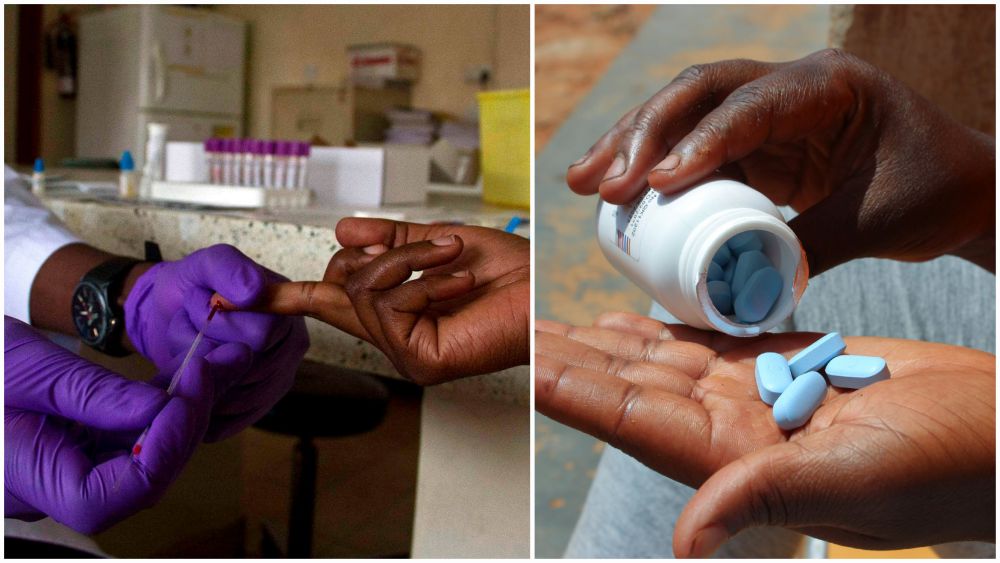
On the treatment front, Uganda is making considerable progress towards the global 95-95-95 HIV targets. The latest figures indicate that 85.3% of adults living with HIV know their status, 99.1% of those diagnosed are receiving antiretroviral therapy (ART), while 96.5% of those on treatment have achieved viral suppression.
However, children remain a major concern, with only 71% of those living with HIV knowing their status, 93% of diagnosed children receiving treatment and 88% achieving viral suppression.
Addressing journalists, the Acting Director General of Uganda AIDS Commission (UAC), Etii Timothy, who represented Director General Dr Nelson Musoba, said Uganda had made tremendous progress in the fight against HIV/AIDS since the first cases were identified in the 1980s.
He credited President Yoweri Museveni’s leadership and the country’s multi-sectoral approach for helping reduce national HIV prevalence from approximately 18% in the 1980s to the current 5.9%.
Etii said Uganda had demonstrated resilience in maintaining essential HIV prevention, testing and treatment services despite significant external financing challenges.
He, however, warned that new infections among young people, particularly adolescent girls and young women, remained unacceptably high. He noted that the country needed to strengthen prevention programmes, improve behavioural change communication and ensure that people living with HIV remain on treatment.
Etii also revealed that Uganda AIDS Commission had developed an HIV Sustainability Roadmap to guide the transition from donor-dependent programmes towards a more domestically financed national HIV response.
UGANDA PLANS HIV SYMPOSIUM
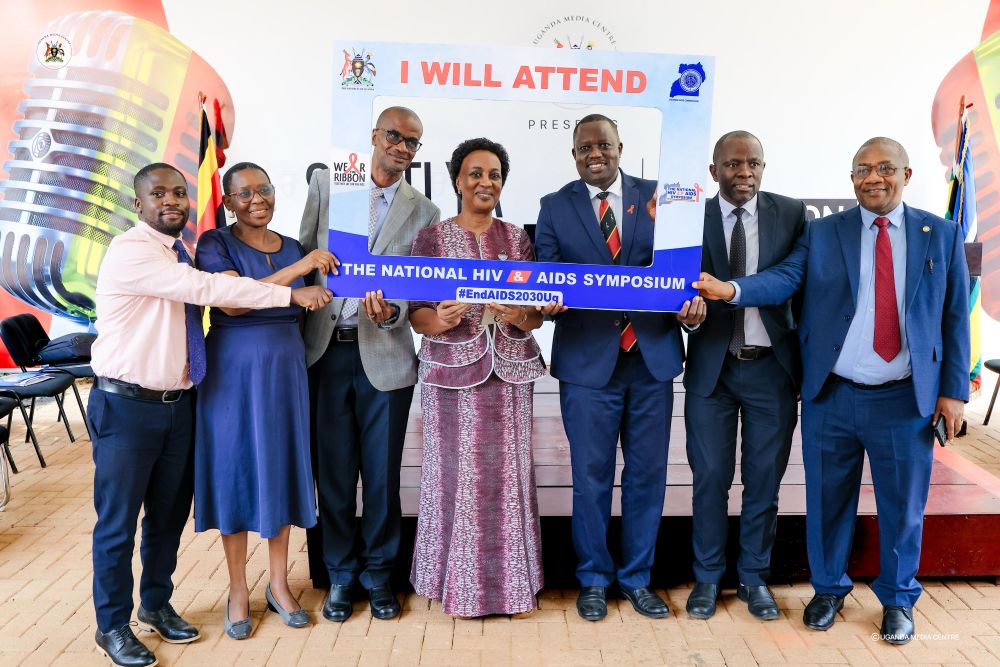
Against this background, Uganda AIDS Commission is preparing to convene the 2026 National HIV and AIDS Symposium (NHAS) from November 16 to 18 at Mbarara University of Science and Technology (MUST), at the university’s Pharmacology Grounds.
The three-day event, organised in partnership with MUST and other stakeholders, will run under the theme: “Sustainable Interventions to End AIDS as a Public Health Threat by 2030.”
The symposium will provide a platform for government agencies, researchers, development partners, civil society organisations and people living with HIV to review progress, discuss emerging challenges and identify sustainable solutions.
The programme will feature the Annual Joint AIDS Review, a scientific meeting, an HIV financing dialogue, the Philly Lutaaya Memorial Day and a partnership forum.
The Annual Joint AIDS Review will assess the country’s performance in HIV prevention, treatment, care and social support, while the scientific meeting will provide researchers and programme implementers an opportunity to share findings and evidence that can improve HIV interventions.
According to UAC Board Chairperson Canon Dr Ruth Senyonyi, the symposium has received more than 120 research abstracts covering different areas of the national HIV and AIDS research agenda.
Senyonyi said the gathering would also help the country understand why new infections, particularly among young people, were not declining at the desired pace.
She explained that the financing dialogue would explore ways of strengthening domestic funding to sustain HIV programmes as traditional donor support faces growing pressure.
Senyonyi further revealed that Uganda AIDS Commission, through its Research Division, was expanding discussions around the possibility of an HIV cure, with a focus on scientific, ethical and social considerations.
A special panel discussion on communication challenges surrounding HIV cure research will also feature at the symposium.
The Board Chairperson urged academic institutions, researchers and other stakeholders to embrace the national HIV research agenda and generate evidence that can guide the country’s response.
PRESIDENTIAL INITIATIVE
Uganda’s renewed efforts are anchored in the Presidential Fast-Track Initiative to End AIDS as a Public Health Threat by 2030, launched by President Museveni in 2017.
The initiative focuses on five key pillars, including engaging men in HIV prevention, accelerating HIV testing and treatment, eliminating mother-to-child transmission, ensuring sustainable financing and strengthening institutional coordination.
The 2026 symposium is expected to provide an opportunity for stakeholders to assess progress under these pillars and agree on priority interventions as the country approaches the 2030 deadline.
The symposium will also precede this year’s World AIDS Day activities, including the national AIDS Marathon, which will take place across 11 major cities. The final marathon will be held at Kololo Ceremonial Grounds in Kampala on November 29, starting at 6:00am.
State Minister for Energy and Mineral Development Hon. Phiona Nyamutoro will serve as the Chief Runner. The marathon is being organised in partnership with TASO Uganda and Village Journeys Africa.
Participants can purchase marathon kits at Shs30,000 through MTN MoMo code 42663810 or Airtel Pay code 4406988.
The Chief Guest at the National HIV and AIDS Symposium will be Minister for the Presidency Hon. Milly Babirye Babalanda, while the keynote address will be delivered by MUST Vice Chancellor Professor Pauline Byakika-Kibwika.
UAC has invited Ugandans and other stakeholders to participate physically in Mbarara or virtually through the symposium registration platform.
The Commission maintains that stronger prevention interventions, sustained treatment, increased domestic financing and community involvement will be critical if Uganda is to achieve its ambition of ending AIDS as a public health threat by 2030.